
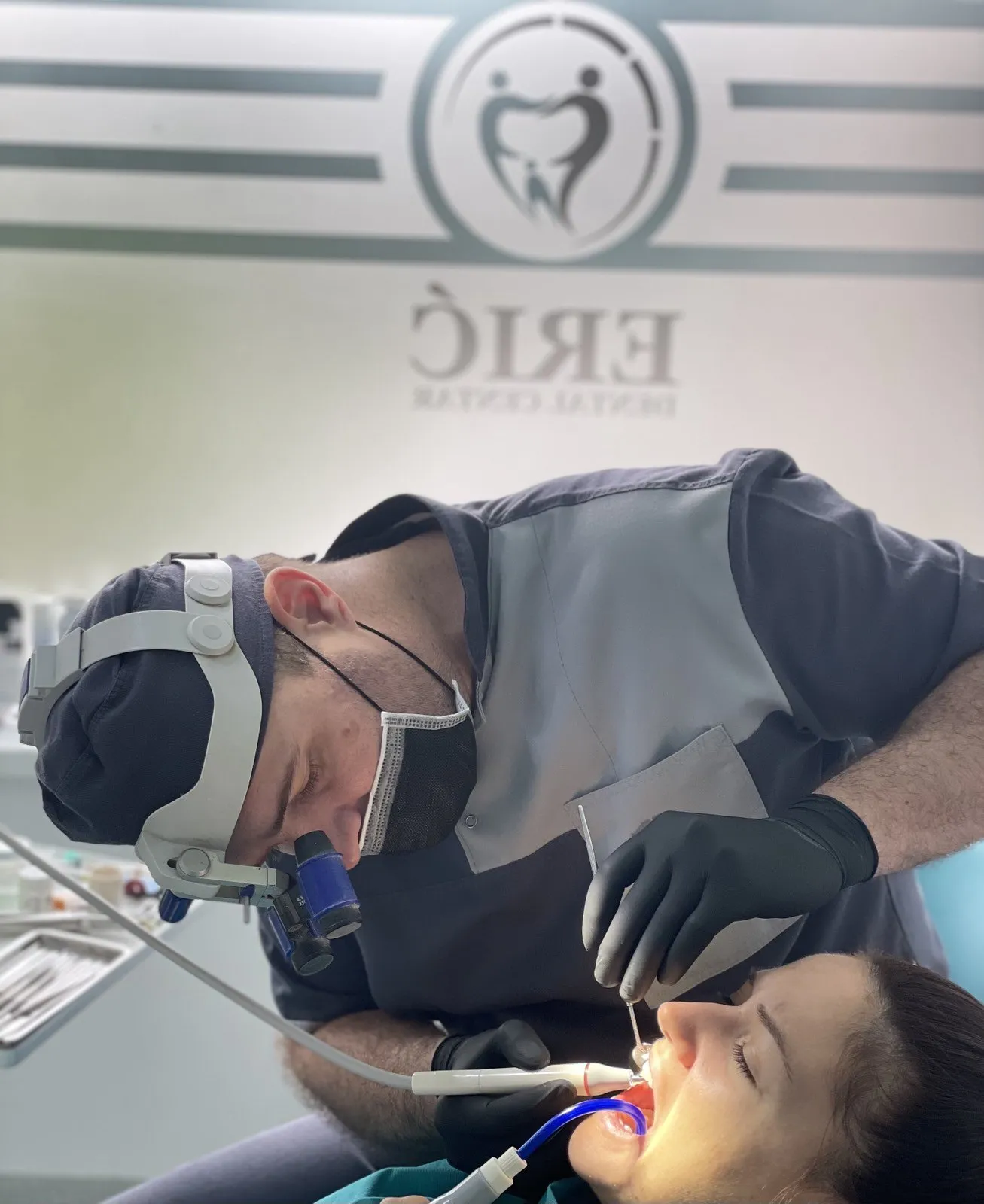
Tartar removal, or a scale and clean as many patients call it, is one of the most common treatments at our practice, and in our view an essential one. We use modern, completely painless techniques. The whole procedure takes less than 45 minutes, and along with the check-up we also air-polish and polish the teeth.
What is tartar?
Tartar is a hard deposit on the teeth that you cannot remove with a toothbrush and toothpaste. It forms when dental plaque mineralises, and plaque is also the main cause of periodontitis. We cannot stop plaque forming, but because it is a soft deposit, we can remove it with regular oral hygiene. Once plaque has hardened into tartar, only a dentist can remove it.
Why is tartar harmful?
Tartar contains colonies of bacteria that encourage decay, periodontitis and other diseases of the mouth. It builds up most on the inside of the lower front teeth and the outside of the upper molars, where the salivary gland ducts open.
The main causes of tartar are:
- insufficient oral hygiene
- smoking
- a poor diet
- teeth damaged by decay
- poorly fitting restorations
- certain systemic diseases
Tartar can form at any age, in children and adults, and equally in men and women.
How often should tartar be removed?
Because tartar cannot be removed at home, it should be removed at regular check-ups every six months, and more often if needed. This prevents periodontitis, receding gums and decay underneath the tartar.
Bad breath, gums that bleed when you brush and gums that are sore to the touch are signs that you should see a dentist. Treatment then starts, above all, with removing the tartar.