

Tooth decay is a disease of the hard tissues of the tooth: enamel, dentine and cementum. Bacteria in the mouth, combined with sugars from food and drink, produce acid that creates a carious lesion on the surface of the enamel. As the enamel breaks down further and loses minerals, the decay progresses and symptoms appear.
Causes of tooth decay
The main factors that contribute to tooth decay are:
- a diet high in sugar
- genetic factors
- poor oral hygiene and bad habits
- dental plaque and bacteria
- poorly aligned teeth
- certain systemic diseases
How to recognise tooth decay
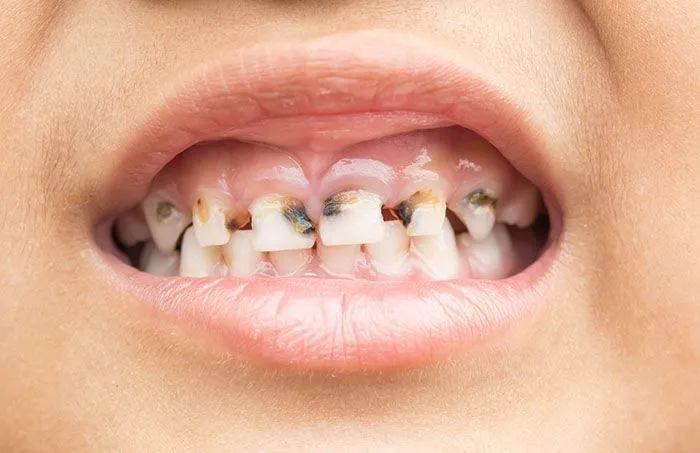
The earliest sign of decay in the enamel is a chalky white spot, most often on the surfaces where teeth touch. While the surface of the tooth is still intact, changes on these surfaces or in the grooves can darken, which is why they are called “dark spots”. As the decay progresses, a defect forms, more and more tooth tissue is lost, the colour changes and a cavity develops.
The diagnosis is made by a clinical examination and an X-ray. Early diagnosis is very important: decay is a process in which the tooth is alternately broken down and repaired. With good oral hygiene, a change in diet and fluoride, the process can be slowed and smaller lesions can even remineralise.
Treating tooth decay
Treatment means repairing the tooth: removing the decayed tissue and replacing it with a white composite filling. If the decay has reached the nerve, root canal treatment is needed.
Don’t let toothache affect your everyday life. Start prevention and regular check-ups in good time.