
The first baby teeth come through by around six months of age, usually the lower front teeth. Next come the upper front teeth, then the molars. By the age of three, a child has all 20 baby teeth.
Why decay spreads quickly in baby teeth
The enamel of baby teeth is thinner and less mineralised than that of permanent teeth. The dentine underneath has wide tubules and a weaker ability to form protective (reparative) dentine. That is why decay spreads faster in baby teeth.
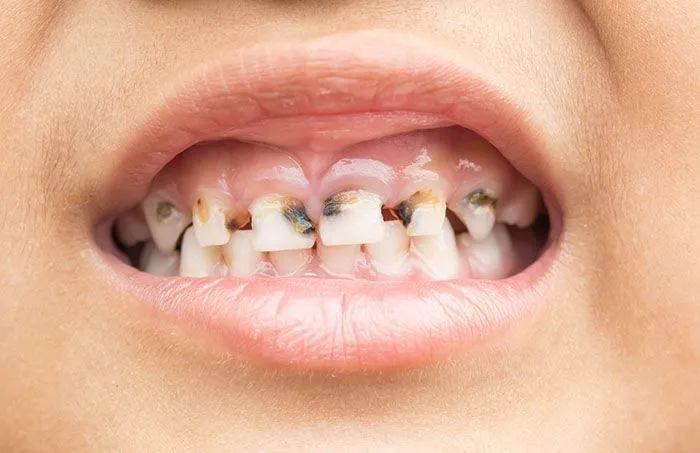
The biggest factors in decay of baby teeth are a diet high in sugar, poor oral hygiene and parents not having enough information. Early decay appears as a white spot on the surface of the tooth. If it progresses, it can lead to infection and death of the pulp, at which point the tooth has to be extracted.
Losing a baby tooth may not seem serious, since a permanent one will come through anyway, but baby teeth matter for the growth and development of the face and jaws, for the bite and for the permanent teeth coming through correctly.
Early childhood caries
If baby teeth are not treated in time and poor eating habits do not change, early childhood caries can develop, the most severe form of decay in children. The upper front teeth are among the first to come through and are the first exposed during breastfeeding or bottle feeding, so decay appears on them first. It then spreads quickly to the other teeth and can even put at risk the permanent teeth that will come through in their place.
How to prevent decay in children
- Cut down on sweet drinks, especially before bed.
- Brush from the very start. At first only the gums are cleaned, and from the first tooth a toothbrush and toothpaste are used.
- Twice a day: in the morning after waking up and in the evening just before bed, after which the child drinks only water.
- Fissure sealing. Once the permanent molars come through, we recommend fissure sealing for children with a higher risk of decay, because these teeth sit right at the centre of the bite.
Read more about how we work with our youngest patients on the children’s and preventive dentistry page.